Monday, 30 July 2012

Objectifying... objects

Consider this, "every object tells a story if you know how to read it".

To a large extent, yeah. Every object tells a story. The way we look at it, the way we use it, the way we stereotype it and even the way we reject it, sends a strong communicative signal between the object itself, its user and the people around us. It is ingrained into our nature to personalize our belongings; the driven need to make things specially ours so that one day even when we're gone, we won't be forgotten - not completely at least.

Personalization
We've all had the habit of personalization. Adding that sticker to your guitar, keeping that trophy up that shelf, these actions are backed up with stories behind them; reasons why we treasure them so much. You might have a teddy bear you've kept since your childhood. Or that precious gift from your first love. Or maybe the family heirloom your mother left you before she passed away. Objects tell a story. It's up to us how we interpret them.

Read up on this tear-jerker. If you don't, then well, too bad.
Sentimental Belongings: The Stories Behind the Objects


Archaeology
The hunger for truth often involves a lot of hard work, research, blood, sweat and tears. Archaeologists who study human activities in the past, work hard to figure out what happened million of years ago or before human evolution dig hard at many objects such as old fossils and rocks that non-experts like us would never imagine these objects to be anything more than, well, rocks. Or dirt.


An archaeologist carefully extracting the artifacts from the ground.

These objects however, are capable of telling a story, revealing information into its origin, species and more. Each artifact has had a place in its time and they give an insight to how the world was like before modernisation and urban development. The saying that the dead would never speak is proven otherwise by objects such as these.

Tools of the trade
All throughout history, objects have been used as a communicative tool, even til today.

The painting of Mona Lisa for example. A simple portrait of a lady sparked intense interest in the drawing. It led to the obsession of the mystery woman in the painting and the painter Leonardo da Vinci himself. People have objectified the Mona Lisa painting as an aesthetic, philosophical and advertising symbol, entering eventually into the irreverent parodies of the Dada and Surrealist artists. Numerous theories have surfaced, debating from when Da Vinci painted the portrait to the extent of whom the lady in the painting truly is. Even more, tyhe obsession of some who've analysed the painting to the point of developing meanings to the painting, for instance, the reason why Mona Lisa's right hand is resting on her left!
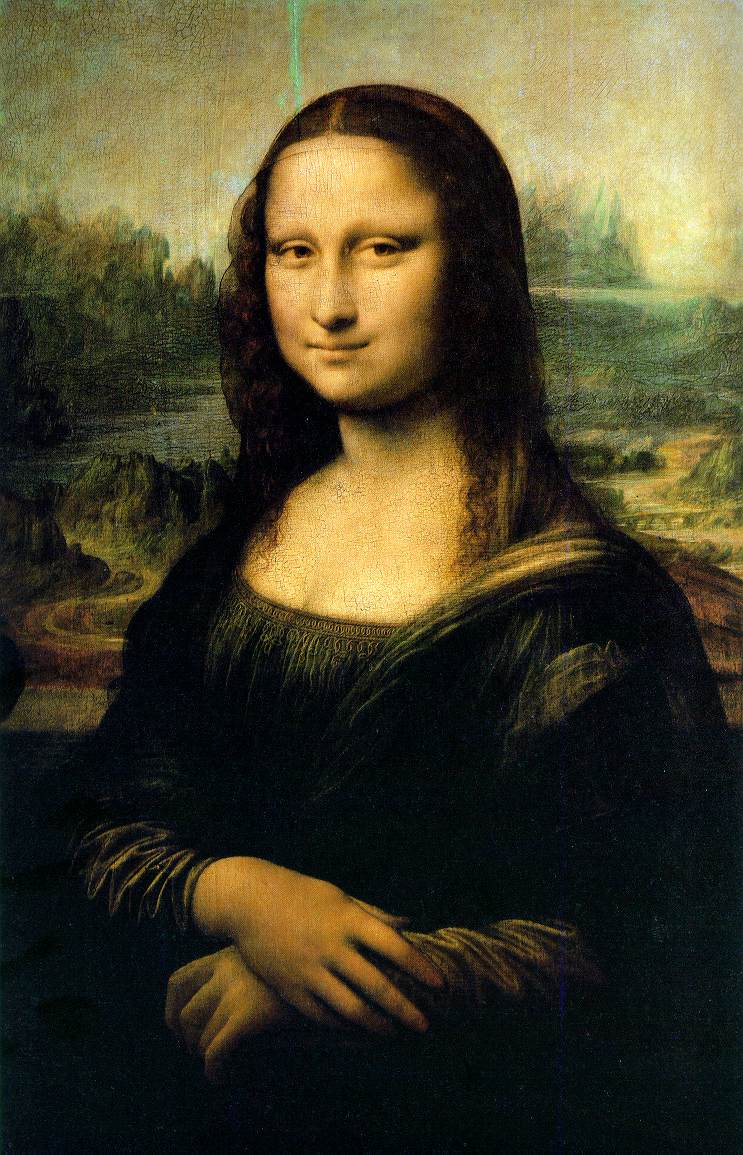

Look at me. Yeah, I'm smiling. Or am I? WHAT DOES IT MEAN?

Another example; a condom. To a conservative individual or society, even the mere mention of it is TABOO. But it's function was never to incite casual sex. It was the protection from sexually transmitted diseases.

There are many benefits of having regular sex. We're not kidding. It says so right here. But in the pre-condoms era, people tend to worry about that. The chances of unwanted pregnancy or the possibility of contracting STDs are too high for people to be practicing that on a regular basis.

Here comes the invention of condoms. People become obsessed with sex because they know they are safe from the above negative scenarios. Once again, condom sends a strong message in telling us it’s safe to enjoy the benefits of sex.

All around the world armies would distribute condoms to their soldiers. From one of our own experience in the army in Singapore, whenever they're sent on overseas missions, they will be issued condoms. Nobody will or need to brief them on why they are issued such items. It’s quite clear in the message they will not stop us from such activities, but to practice it safely. For more information, check this out.

As long as there is the demand, there will always be the supply. People will always try to enhance or try to extend the product to a greater use for a greater effect. Glow in the dark or battery operated vibrating condoms were some of the examples of a jump in technologies. Manufacturers upgrade their products to tell the masses that condom is not an obstacle in sex, but it excites the process through their product. Just like a cell phone, it is constantly upgraded to improve people's lives.

Every object is made with a purpose. Every object is created to lay a message. No object would be created without any meaning behind it, although it’s through individual’s eyes to perceive the meaning behind the object. The creator may build it with a logical rationale behind it, but the real meaning that gets sent to every one else differs, or distorted in a way, thus creating conflicts or debates. But that’s just us. Like they said, to each their own.


"It's an indication of how cynical our society has become that any kind of love story with a sad theme is automatically ridiculed as sentimental junk."
- Winona Ryder

Friday, 27 July 2012

Document: Sky 5


Being on foreign land shouldn't differ you much. You're still breathing the same air and sharing the sky.

Thursday, 26 July 2012

Document: Sky 4


Constructing nature. When is nature not good enough?

Video Killed the Radio Star!


Radio, despite having been surpassed by the wonders of television and new media, still retains its relevance in today's society, albeit not as popularly.

"A new medium is never an addition to an old one, nor does it leave the old one in peace. It never ceases to oppress the old media until it finds new shapes and positions for them." (1964)

The different media outlets available today are constantly competing against one another for our attention. But they're never really out of the business. Just further back in line. Radio was a major hit as far back in the early 1920s, but even til today when the interwebz has become the dominant entertainment source, radio hasn't lost its value. It still remains a source of news, information and music, as it had always been. It has however, evolved into having niche programming with even segmented shows throughout the day - meeting the interests of different age groups, racial backgrounds and more.

This might be THE MOST exciting assignment we've had to complete to date. So check out our quick discussion on how or why we think 'Radio Affects Us Most Intimately'.


"When you get something like MTV, it's like regular television. You get it, and at first it's novel and brand new and then you watch every channel, every show. And then you become a little more selective and more selective, until ultimately... you wind up with a radio."
- David Lee Roth (Lead Singer of Van Halen)

Wednesday, 25 July 2012

Picture Perfect

Qn. 1 How does a photograph "elevate the ordinary to the extraordinary"? Relate this to your current task of communication.

The world is beautiful. And most of the time, we forget that. Our thoughts are so transfixed to the beauty defined by social culture that we pay no attention to nature and it's wonders. That's what we hoped to capture in our current task.

There are times when we think an ordinary event or a specific 'moment' in our life is extraordinary. Instead of seeing and remembering these special moments, imagine how powerful these moments could impact others if they could be 'frozen' in time and shared to those who have unfortunately missed it?

If we were to start breaking down the definitions of what 'ordinary' and 'extraordinary' could mean, we'd get dozens of responses. Simplicity, uniqueness or something spectacular could either be ordinary or extraordinary in different perspectives; one person's perspective differs from the other another.

We have chosen 'clouds' as our subject, predominantly for its two-faced personality. On a good day, the fluffy white clouds invoke a feeling of innocence, something we take for granted growing up. But when a storm hits up, we run from it, cowering under its might, fearful of the destruction it might cause. But above all, clouds are open to interpretation. Check out our collection in the sidebar.

To some people, these clouds could well be non-existent but to others, they could be something as important as the whole composition. It's perspective.

"You don’t really understand human nature unless you know why a child on a merry-go-round will wave at his parents every time around — and why his parents will always wave back." (Journalist William D. Tammeus)

The key is passion, how passionate do we see life as it is? How passionate could we be to see every moments as our life goes by? If we have the passion in everything that we do, we could turn it into an inspiration. We could turn something unimaginable to something mind-blowing.

Through eyes of the lens, we are capable of seeing beyond those fluffy white clouds.


Qn. 2 How is the photograph part of our (or your) vernacular? Examples?

In-built cameras are available on our electronic devices - mostly the vital ones, such as phones, iPads, etc. We are no longer constrained to carrying bulky cameras around our necks though tourists have a fascination with that fashion statement. Anyone can take pictures. Even the most un-technologically savvy person is capable of managing the fundamental aspects of photo-taking. In a way, it's all been prepared. It's been made easy - enough that we've made it a part of our vernacular.

Social sites such as tumblr, instagrm, flickr, photobucket, picasa and many others, focuses on sharing images, or video content across their platforms. Because of the ease in access to a camera, even the ones with built-in applications for filtering and colour grading, EVERYBODY IS DOING IT.

It's basically a hipster's nightmare. No longer are we expected to be professional photographers and take mind-blowing, never-before-seen angle shots or elements that push the boundaries of art and science. With a snap, I can take a picture of the ant that's been harassing me for the past half hour. No fumbling with lenses or focus, just SNAP.

Photography has become an extension of our lives, and in a way, an extension of us, to help us see what we don't normally take notice and to keep physical copies of our memories before they fade away.


"Which of my photographs is my favorite? The one I’m going to take tomorrow."
– Imogen Cunningham

Document: Sky 3


Flight. What was once impossible, is not considered one of the safest ways to travel. And even when we're up in the air, doesn't it seem like we're grounded? Surrounded by a sea of clouds.

Tuesday, 24 July 2012

Side Project: The Age of Reason

We used a quote in one of our earlier post from the movie the Day After Tomorrow.

"Elsa: What've you got there?
Jeremy: The Gutenberg Bible... it was in the Rare Books Room.
Elsa: Think God's gonna' save you?
Jeremy: No... I don't believe in God.
Elsa: You're holding on to that Bible pretty tight.
Jeremy: I'm protecting it.
[pause as Elsa glances at J.D. throwing books on the fire]
Jeremy: This Bible... is the first book ever printed. It represents... the dawn of the Age of Reason. As far as I'm concerned, the written word is mankind's greatest achievement.
[Elsa gives a light snort]
Jeremy: You can laugh... but if Western Civilization is finished... I'm gonna' save at least one little piece of it. "

It was never elaborated, probably because one of our members thought of it on the commute back home. It wasn't even explored for that matter.

The Gutenberg Bible was the first book ever printed. It brought above massive change in terms of literacy, knowledge, information, etc. But most importantly, it allowed the transference of ideas from our heads onto paper.

In the book, Ways of Seeing,

"The relation of what we see and what we know is never settled"
- John Berger

There is a constant battle, a push-pull effect if you'd like, between what we know and what we see. We're always questioning things and the book, having allowed for our thoughts to be penned down, represents the age of reason.

Our thoughts are not put in questions, whether or not something is true, or whether something is right. The battle for dominance is apparent, for arguments are no longer about being right, but being convincing enough that it becomes the truth. Lawyers do this everyday, as they work on deals rather than cases and they're only ever as good as they are convincing.


"Thomas did not believe the resurrection; and, as they say, would not believe without having ocular and manual demonstration himself. So neither will I; and the reason is equally as good for me, and for every other person, as for Thomas."
- Thomas Paine, Age of Reason, Part 1